The principle
Article 14 bis of the order of 19 July 1954 requires the vehicle to meet the requirements applicable on its date of first registration. A 2012 vehicle is therefore judged by the 2012 rules, not today’s.
The list of the 9 areas
- Braking
- The driver’s rear visibility and indirect vision devices (mirrors)
- Noise level
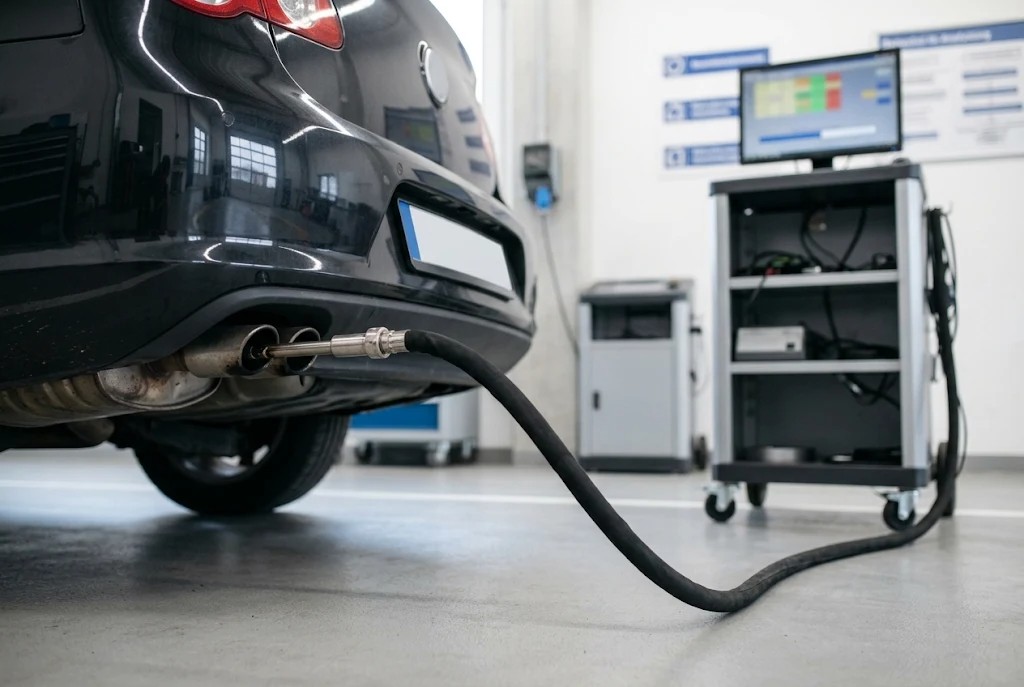
- Emissions
- Radio interference suppression, if the vehicle is concerned
- Electromagnetic compatibility of components, if concerned
- Electrical safety, if concerned
- Hydrogen safety, if concerned
- Automated driving system, if concerned

The accepted evidence
- Approval communication forms.
- Test reports from a technical service notified by a European Union Member State.
- A manufacturer’s certificate.
Vehicle already registered in an EU country
When evidence is missing, the French authorities ask the State of origin whether tests have already been carried out, and request the results. The choice remains yours: wait for the answer, or have the missing tests carried out by a notified technical service.
Outside the European Union. For a vehicle coming directly from Japan, the United States or the United Kingdom, this request between States does not exist. Evidence must come from the manufacturer or from tests.
What about the other areas?
Lighting, glazing, seat belts, tyres… All the other areas are checked by the DREAL when the vehicle is presented. When a point cannot be checked by eye, supporting evidence may be requested.